

CHALLENGE
Dignifying temporary workers’ accommodation at Camps Elisis, Lleida
Every summer, Lleida becomes a hub for seasonal workers who arrive to work in the fruit harvest. However, despite being a key activity for the region’s agricultural economy, many of these people are unable to access decent temporary accommodation.
In particular, in 2020 the accommodation conditions available at Camps Elisis did not guarantee minimum standards of dignity. On the one hand, sanitary facilities were insufficient; on the other hand, there was a clear lack of adequate rest areas and a complete absence of shared social spaces.
IDEA
First of all, the proposal is based on a clear premise: dignity is not negotiable.
Therefore, we propose a comprehensive solution that combines improved infrastructure, quality of life and symbolic impact. In this way, the proposal not only addresses an immediate need, but also engages the city and the agricultural sector as a whole.
In this context, the core pillars of the idea are:
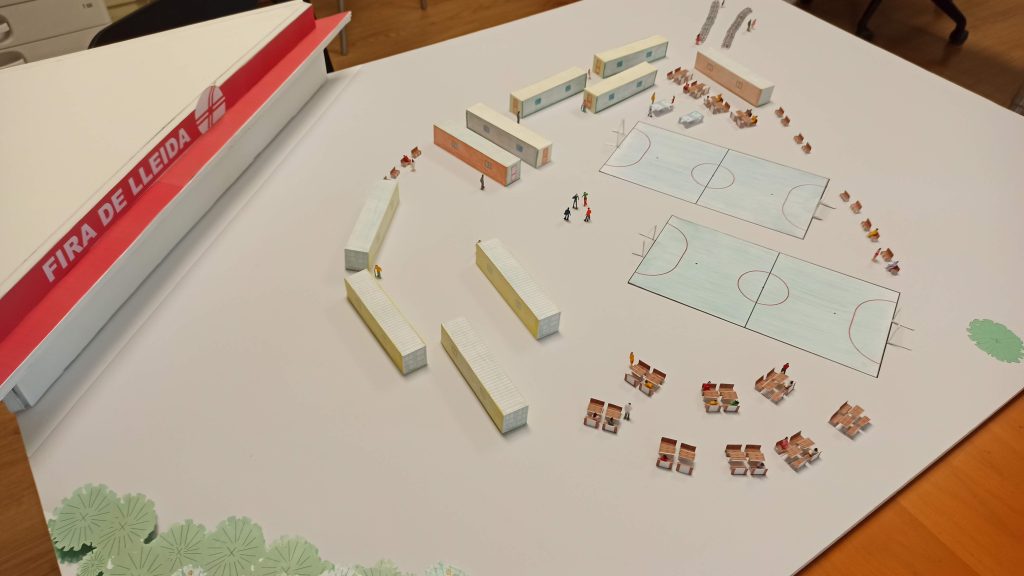
- Firstly, improving sanitary facilities—especially showers and toilets—in order to ensure adequate hygiene and health conditions for the people accommodated.
- Secondly, creating a welcoming environment by incorporating sports and leisure areas that promote rest, social interaction and well-being.
- Finally, designing an affordable, ecological and dismantlable solution, executable in the short term and without relying on lengthy administrative processes, with the possibility of funding through sponsorships.
Furthermore, the proposal adopts a clearly disruptive form: a large pear visible from the air.
In this way, it becomes a direct symbol of the fruit sector, linking product value, territory and the living conditions of those who make it possible.
STRATEGY
With regard to the strategy, the E-Micro Seal acts as an indirect—yet legal—mechanism within public procurement. Although the law does not allow competition to be restricted directly, it does so through tender specifications. In fact, these specifications often include requirements misaligned with the actual tasks to be performed, thereby excluding small local companies.
At the same time, the strategy combines ephemeral urbanism, social architecture and visual communication.
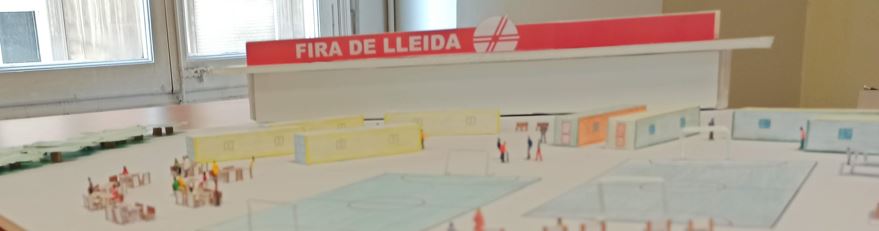
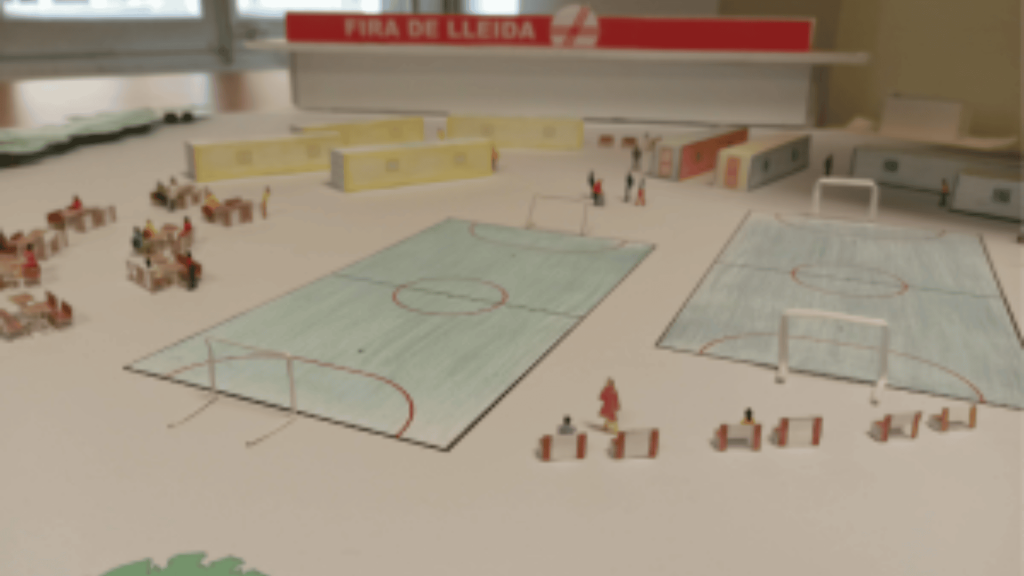
To this end, the project was developed from a conceptual model created at Vintiuna, which made it possible to visualise both the physical implementation and the symbolic impact of the proposal.
Likewise, the solution is conceived as a temporary but replicable infrastructure, adaptable to other agricultural contexts facing similar challenges and capable of evolving according to the real needs of users.
RESULT
As a result, the project was presented by Vintiuna as a social and territorial intervention proposal.
Consequently, it generated public debate and contributed to subsequent improvements in the external sanitary facilities at Camps Elisis.
Ultimately, beyond its physical outcome, the project demonstrated the power of creative ideation applied to complex social issues, using design and visual metaphor as tools for transformation and awareness.ció.